
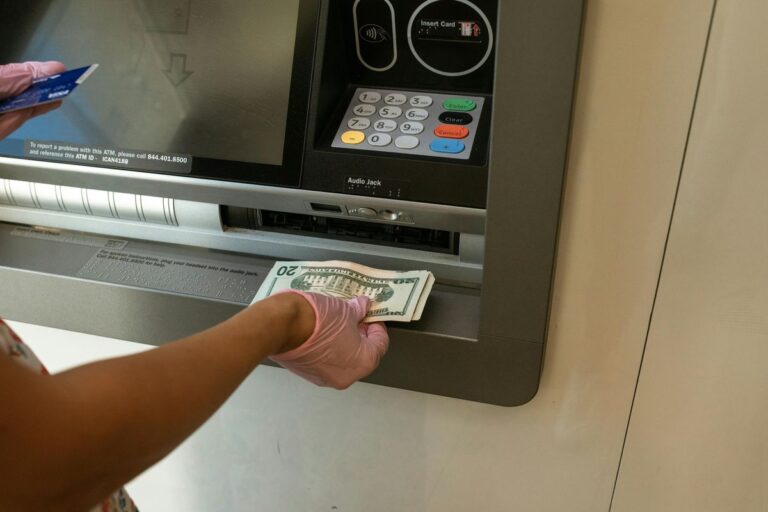
The average savings account at a traditional bank earns a fraction of a percent annually. High-yield savings accounts — mostly offered by online banks and credit unions — have been paying significantly more, sometimes 15–20 times higher. Understanding how to evaluate and use them effectively makes a real difference to what your money earns.
How High-Yield Savings Accounts Pay More
The rate difference comes down to operating costs. Online banks don’t maintain branch networks, which dramatically reduces overhead. They pass some of those savings to customers through higher deposit rates. Credit unions, as member-owned institutions, also tend to return more of their income to members through better rates on both loans and deposits.
Interest rates on high-yield savings accounts track the federal funds rate set by the Federal Reserve. When the Fed raises rates, these accounts tend to follow upward relatively quickly. When the Fed cuts rates, the rates on savings accounts drop too. Unlike CDs, savings account rates are variable — they can change at any time.
FDIC and NCUA Insurance
A common concern about moving money to an online bank is safety. High-yield savings accounts at FDIC-insured banks are protected up to $250,000 per depositor, per ownership category. Accounts at credit unions are insured up to the same limits by the NCUA (National Credit Union Administration). This insurance covers deposits in the event the institution fails — not market losses, but there’s no market risk in a savings account anyway.
Before opening any savings account, verify the institution is FDIC or NCUA insured. The FDIC BankFind and NCUA research tools confirm this quickly. Most legitimate online banks and credit unions feature their insurance prominently, but verifying independently takes 30 seconds.
APY vs. APR: The Savings Account Math
Savings accounts advertise APY — Annual Percentage Yield — which accounts for compounding. A 5% APY account that compounds daily earns slightly more than one that compounds monthly at the same stated rate. APY makes comparison easier because it represents the actual annual return after compounding.
When you’re comparing accounts, APY is the right number to use. Don’t compare an APY from one account to an interest rate (APR) from another — they’re calculated differently and can be misleading.
What to Look For Beyond the Rate
Rate is the starting point, but a few other factors determine whether an account actually works for you:
Minimum balance requirements: Some accounts require a minimum daily balance to earn the advertised APY. Falling below that minimum may mean earning a much lower rate or being charged a fee. Many high-yield accounts have no minimum balance requirements at all — if you’re comparison shopping, those are worth prioritizing unless you’re confident in maintaining a minimum.
Monthly fees: Some accounts charge a monthly maintenance fee that can offset or erase your interest earnings. An account paying 4.5% APY with a $10 monthly fee might net less than one paying 4.0% with no fee, depending on your balance. Do the math for your specific balance amount.
Transfer speed: Online savings accounts connect to your checking account via ACH transfers. The standard transfer time is 1–3 business days, though many institutions now offer faster options. If you need frequent quick access to your savings, this matters. If the money is truly sitting as an emergency fund or long-term savings, a few days’ transfer time is a minor inconvenience.
Withdrawal limits: Federal rules previously limited certain types of withdrawals from savings accounts to six per month, though those regulations have been relaxed. Some banks still enforce limits or charge fees for excess transactions. Understand the policy before opening an account, especially if you might need to move money frequently.
Using High-Yield Savings Effectively
The highest-value use cases for a high-yield savings account are funds you want to keep accessible but aren’t actively spending — your emergency fund, a down payment you’re saving toward, tax money set aside if you’re self-employed, or a vacation or car fund.
Keeping money in a low-yield checking account or traditional savings account when it could be in a high-yield account is simply leaving money on the table. The accounts operate the same way — they’re FDIC insured, you can access the money — the only difference is what you earn while it sits there.
The Rate-Chasing Question
When rates on savings accounts are high and competitive, you’ll see headlines about moving money between accounts every time one bank offers 0.10% more than another. In practice, chasing marginal rate differences on smaller balances isn’t worth the time. On $10,000, a 0.25% rate difference is $25 per year.
More meaningful is the difference between a traditional bank paying 0.01% and an online high-yield account paying 4.5% — that gap represents $449 in annual earnings on $10,000. Making that move is worthwhile. Switching between two high-yield accounts for a 0.15% improvement rarely is.
Opening an Account
Most online savings accounts take 5–10 minutes to open. You’ll need your Social Security number, a form of ID, and the account and routing number for an existing bank account to fund the initial deposit. Many accounts have no minimum deposit, though some require $1–$100 to open.
Compare a few options before committing. Rates change, and what’s competitive today might not be in a year. Setting a reminder to review your rate annually — and check whether alternatives have pulled ahead — is a simple habit that keeps your money working efficiently.
